It can be difficult to tell the difference between different non-fiction forms of writing or what category your book falls under. Here are some basic tips on how to distinguish the different subgenres. Before we begin, it’s important to get the gist of non-fiction as a genre in and of itself. By definition, non-fiction recounts a true story about something. It is based on fact, though how strongly one adheres to fact is where the distinctions in the different categories below come into play.
Narrative Non-fiction
You may have heard the term “creative non-fiction” or “literary non-fiction” before. They are essentially the same thing as narrative non-fiction, though narrative non-fiction is more readily used these days. As you may deduce by the adjectives used in these forms of non-fiction, they consist of writing that has a creative or narrative flair to what would otherwise be a straightforward account of true facts. While a news article is also non-fiction, where narrative non-fiction differs is that there is a storylike element that makes the writing feel more like fiction. John Krakauer’s books fall squarely into this category. He wrote Into Thin Air and Into the Wild, both books about true events that occurred. In the former, he himself experienced part of the event on Mount Everest, but added strong elements of storytelling to bring about a more compelling story. Some might describe the book as a memoir because it is a first-person retelling of the story. In Into the Wild, Krakauer retraced Christopher McCandless’ steps and wrote a book based on the research he’d done about the young man’s trip to Alaska. Because a lot of what he wrote was an imagining of what McCandless must have done, thought and felt, this book could be characterized as narrative non-fiction.
Biography
A biography is the retelling of someone else’s life. It tends to tell the story of a person’s whole life, and some may consider these types of books as less engaging due to the fact that the writer is bound by the facts of that person’s life. The authors of these types of books also cannot know much detail about the people’s inner thoughts and feelings about things, so the writing may feel more removed than narrative non-fiction. However, in today’s world, people are looking to read more storylike books, so many biographies have taken on more storytelling elements that make them more engaging and fun to read. The authors are still bound by the fact, but they can intersperse those facts with more colour to brighten the story. Some examples of biography are: Red Comet: The Short Life and Blazing Art of Sylvia Plath by Heather Clark and At Your Service: Authorized Biography of Eugene “Uncle Gene” Verdu by Mike Stith.
Autobiography
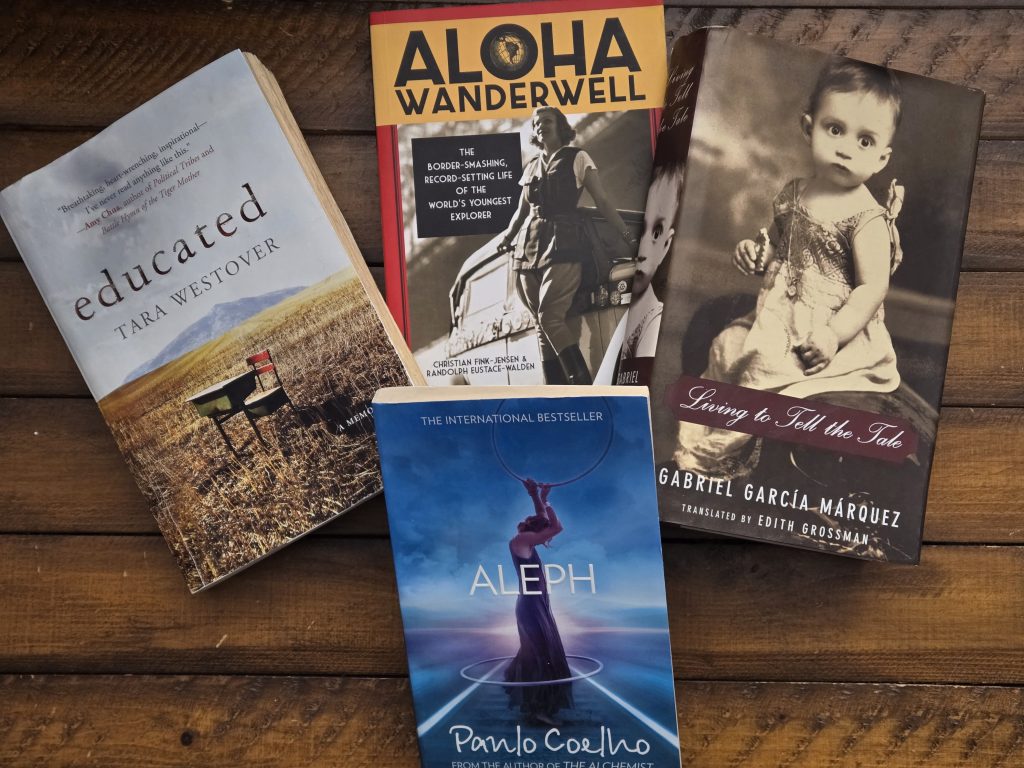
Whereas a biography is written about the life of someone other than the author, an autobiography is about the author who wrote it. This book is still telling a story, but it encompasses your entire life, from childhood until the present day. The intent is that you give an accurate retelling of your life, including lessons learned along the way. An autobiography is generally written chronologically and it prioritizes fact over memory. Examples of autobiographies include Living to Tell the Tale by Gabriel Garcia Marquez and Born a Crime by Trevor Noah.
Memoir
Memoirs have become increasingly popular in the past twenty years, though it’s a genre of writing that has existed for centuries. Many people confuse memoir with autobiography. Both types of books are written about the author themselves. But where autobiography is about your entire life up until the present, a memoir will cover a particular period in your life. Memoirs also have a lot more leeway in that they include more narrative elements, often making them feel like novels. Memoirs are also not bound by chronological order. They can be written according to theme and jump around based on that theme, or they can be written chronologically. They can focus on a short time frame in someone’s life, like the time you spent five years in Japan, or they can be written about a theme, like your struggle with an eating disorder. Because memoir is focused on our memories, and memories are often flawed, it is generally accepted that these types of books will not adhere as strongly to fact as an autobiography might. There is more room here to play with storytelling. A few examples of memoirs include Educated by Tara Westover and The Glass Castle by Jeannette Walls.
To sum things up, narrative non-fiction is quite a broad category, and while I’ve given examples of books that fall into certain categories, those same books may be categorized differently in other articles. For example, Born a Crime is considered by many to be a memoir, but Trevor Noah himself has called it an autobiography. There is a lot of fluidity in many of these subgenres. As long as you keep the basic principles in mind, however, you can get a better sense of the type of book you may want to write. Best of luck!